
#191 Marketing your coaching business
Business development for your coaching practice
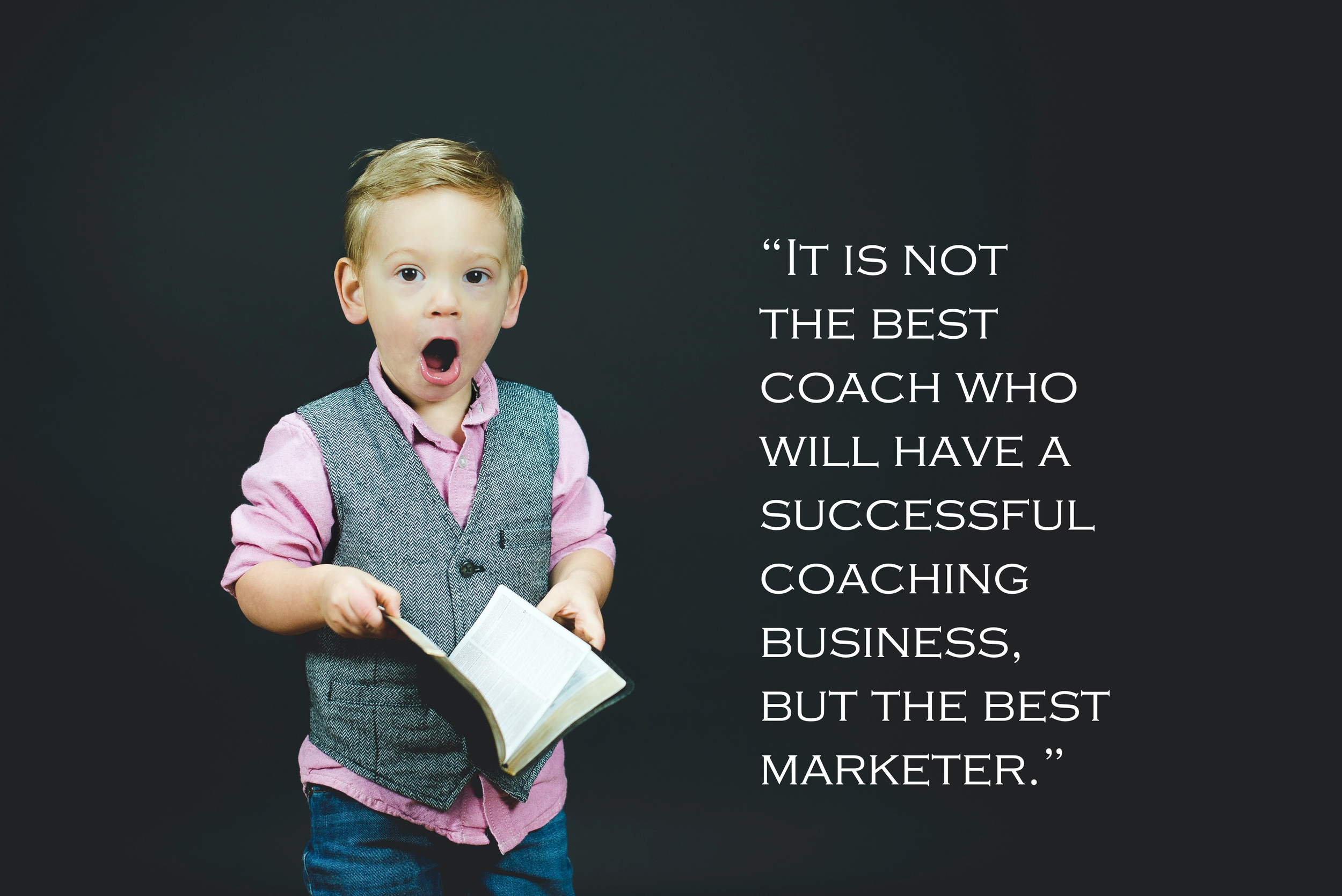
I do not believe this quote is strictly true. It depends on what you deem to be ‘success’. And yet, many coaches struggle with business development, ie marketing themselves. Around this time of year, I usually take stock of where my business is at and begin to plan for next year.
In this newsletter:
· How marketing coaching services is different from selling and how to reframe the ‘sales’ conversation.
· How to stop spreading yourself too thin and do more of the work you really want to do.
· Alternatives to charging by the hour.
How is marketing coaching services different?

‘Marketing: the activity of promoting and selling services.’
It all sounds very one-way, pushy even. The reality is quite different. Marketing coaching services is more about pull. We are in the business of selling pain relief. What is your prospective client’s pain and how can your coaching help them alleviate the pain so they can achieve their goals?
As you use your marketing as an attractor to draw people towards you, perhaps you can use it in another way as well… as a filter for you really want to work with?
If the idea of marketing yourself as a coach feels too pushy and leaves you with the ‘ick’, then perhaps thinking differently about it can help to reframe it as an activity. Who do you want to work with? What is their pain? How can you help? If you can answer these questions for yourself, then you can talk about it more easily with the people you are trying to reach.
A marketing conversation is really just a coaching conversation.
Pay attention to the present to make your future intention a reality.
Do you find you’re spread too thin? Do you find you say, ‘Yes’ too readily to work, even when it is not in your sweet spot? Does this lead to spending too much time on the wrong kind of work and not progressing your goal to build your coaching business?
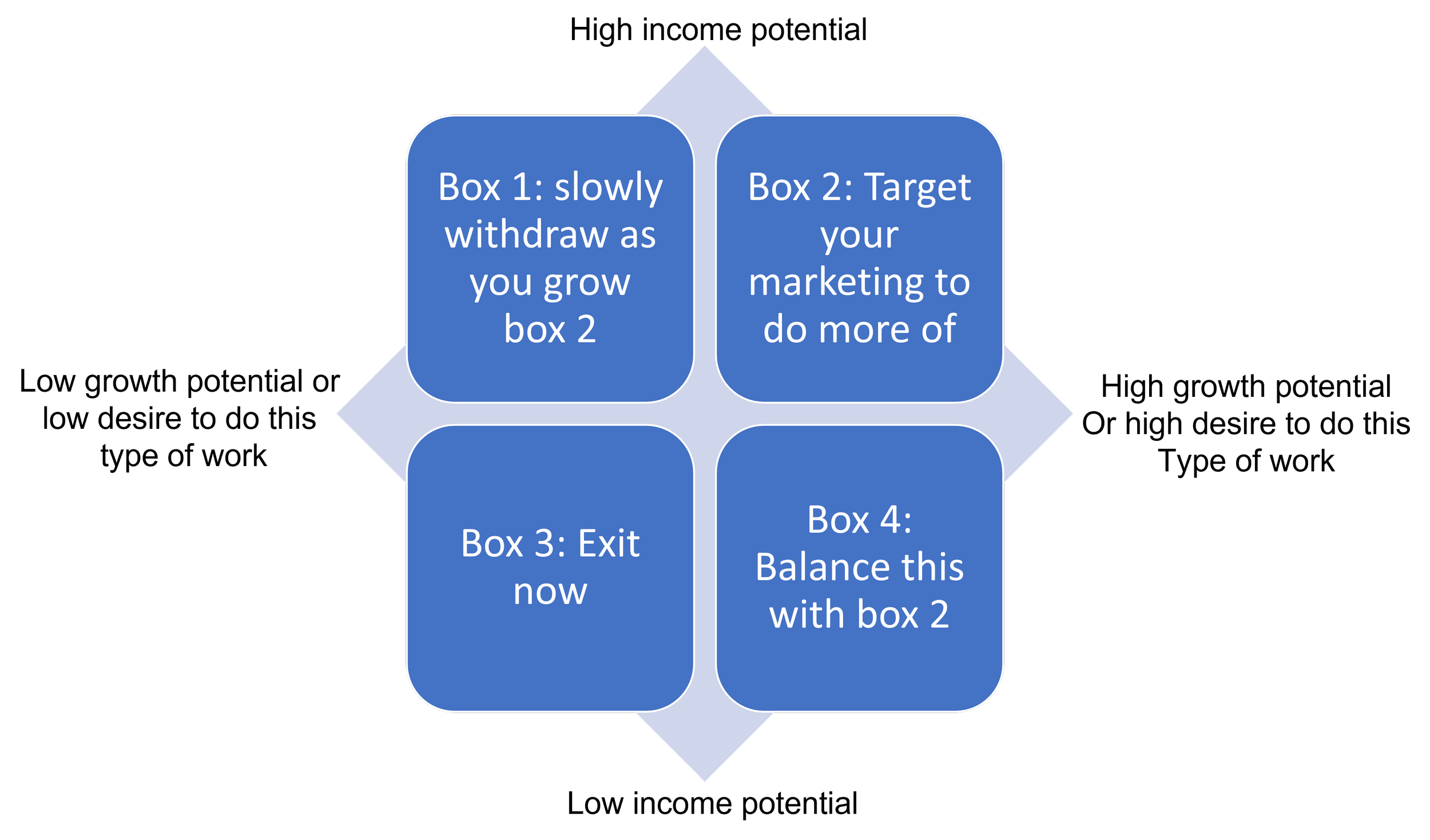
This has come up with clients in a few of my coaching supervision sessions recently - yes your relationship with business development is fair game for taking into supervision too - and through several conversations, this model has emerged. If you are struggling to do the work you really want to do because you are distracted by shiny-looking opportunities that don’t quite fit, then I hope you will find it a useful frame to realise all that glisters is not gold and to think about your how you are spending your time.
We all have to earn money from what we do, and we all have preferences for the type of work we want to do. List all your current contracts or clients and then categorise them into each box in the grid. I find it helpful to think about my intention for my future – is this a growth area for me? It’s not necessarily about the growth potential of that market or type of work; it is just as much – maybe even more – about the kind of work I want to be doing more of in the future. You’ll never get there if your time is consumed in boxes 1 or 3. Box 1 is like your ‘cash cow’. Milk it now but choose to slowly extricate yourself to create space for more of Box 2. Drop Box 3. Seriously. Drop it all now. You will realise at some point that it has been a waste of your precious energy. Make that ‘some point’ now!
Let’s talk fees

I have a suspicion many coaches undervalue their services. How well do you know the going rate for your offer in your market?
How brave are we with our coaching fees? Do we put in more hours than we contract for sometimes because we want to make sure we have added value to our client? If we do (and I know I have done sometimes), we are undervaluing our time even more!
I invite you to think about the value you bring to your client from their perspective.
I often reflect on alternative pricing strategies such as sliding scales, ‘Freemium’, pro bono, packaged services, even a ‘pay what you feel’ offer. I currently have supervision plans at different price points for different coaching career stages.
Are you doing anything other than, ‘This is my hourly rate?’
